

Display Managers
Athena OS ships Ly as a lightweight, terminal-based display manager, designed for users who value simplicity, speed, and minimal resource usage.
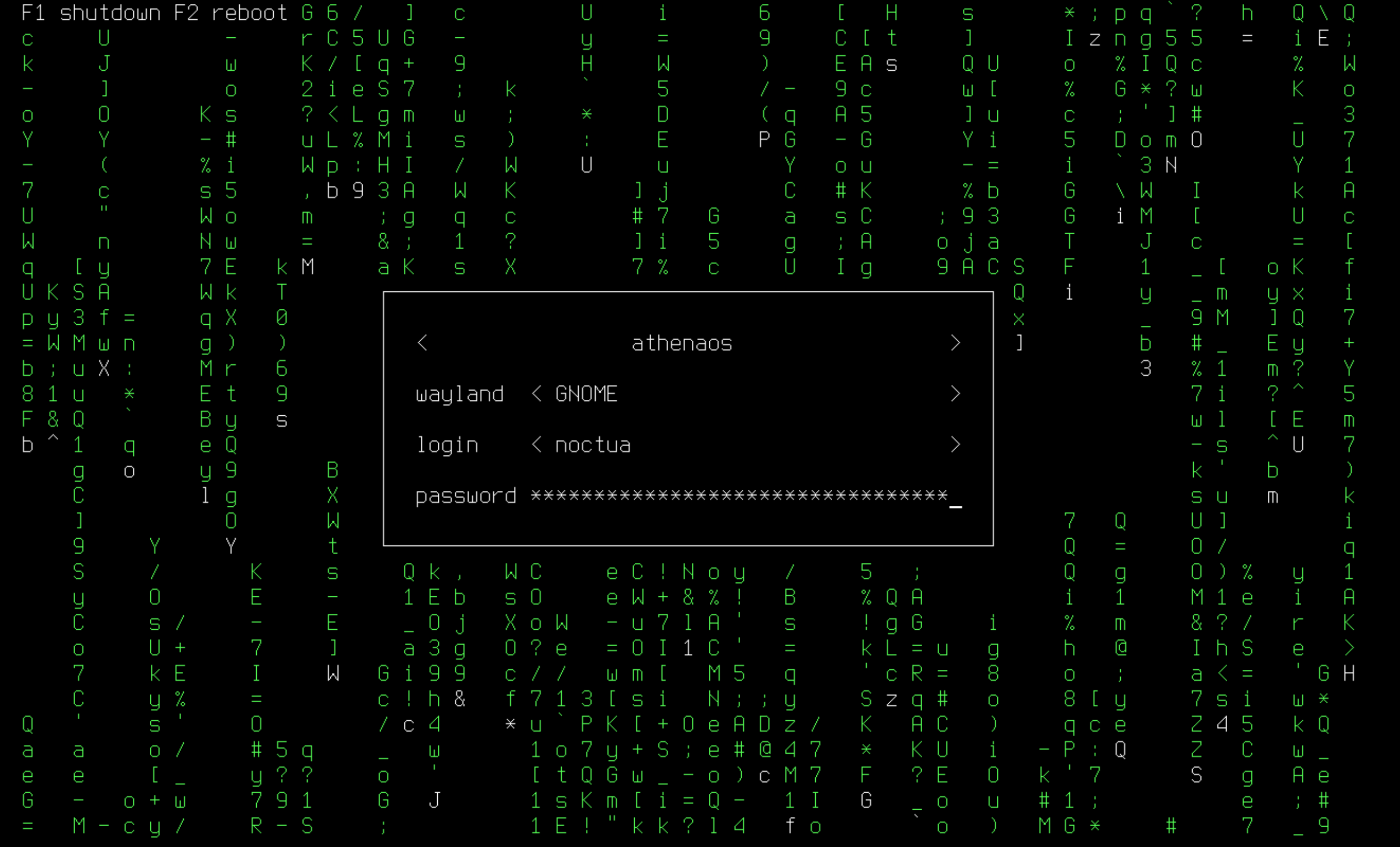
Ly runs entirely in a text user interface (TUI) and is especially well suited for tiling window managers and low-overhead setups. It is ultra-lightweight and fast, provides a fully keyboard-driven login experience, has no dependency on a graphical stack, and is ideal for minimal and advanced workflows alike.
Ly is configured through a single configuration file /etc/ly/config.ini.
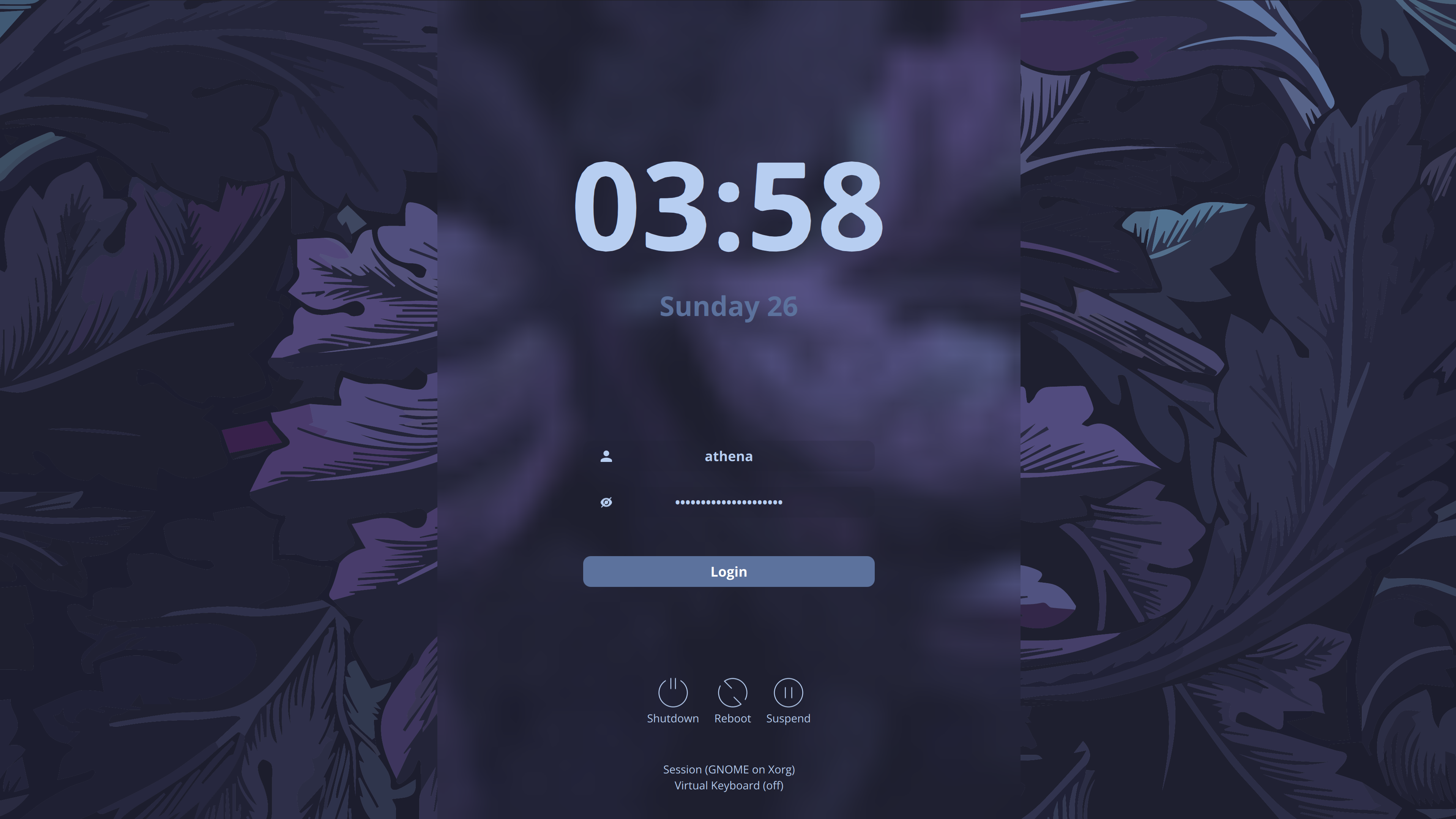
Athena OS provides SDDM as Display Manager because of its reliability and flexibility, in particular the sddm-astronaut-theme.
It offers several themes, static and dynamic, that can be set by editing:
/usr/share/sddm/themes/sddm-astronaut-theme/metadata.desktop:
[SddmGreeterTheme]Name=sddm-astronaut-themeDescription=sddm-astronaut-themeAuthor=keyitdevWebsite=https://github.com/Keyitdev/sddm-astronaut-themeLicense=GPL-3.0-or-laterType=sddm-themeVersion=1.3ConfigFile=Themes/astronaut.confScreenshot=Previews/astronaut.pngMainScript=Main.qmlTranslationsDirectory=translationsTheme-Id=sddm-astronaut-themeTheme-API=2.0QtVersion=6To set a different theme, edit ConfigFile=Themes/astronaut.conf line by declaring your favourite .conf file. The name of the available config files can be found in /usr/share/sddm/themes/sddm-astronaut-theme/Themes directory.
/etc/nixos/modules/dms/sddm/default.nix :
environment.systemPackages = with pkgs; [ (sddm-astronaut.override { embeddedTheme = "cyberpunk"; }) ];To set a different theme, edit embeddedTheme = "cyberpunk"; line by replacing its value by your favourite theme. The name of the available themes can be found between the filename, without extension, of files in the /run/current-system/sw/share/sddm/themes/sddm-astronaut-theme/Themes directory.
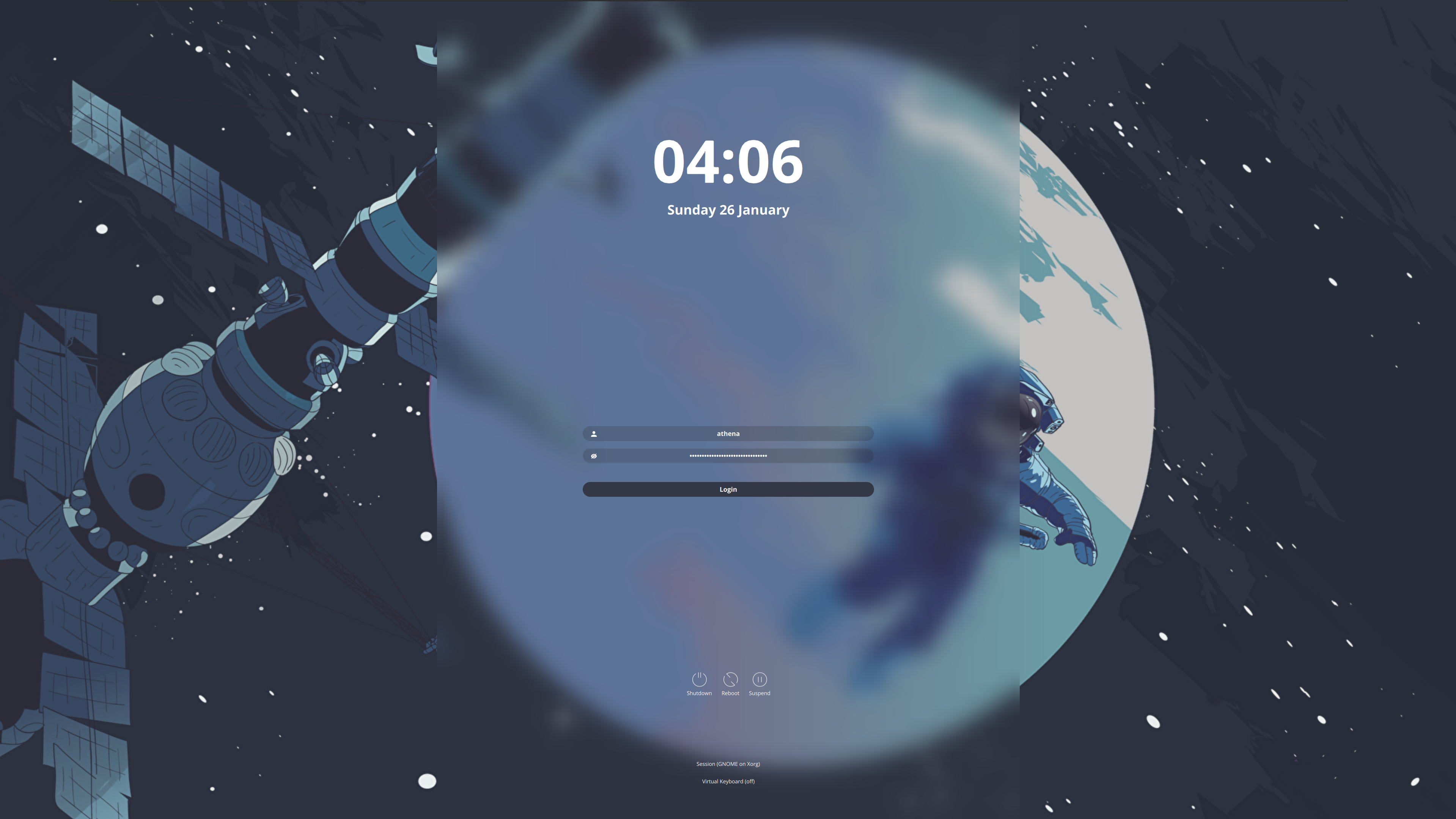
Astronaut
Section titled “Astronaut”Themes/astronaut.conf
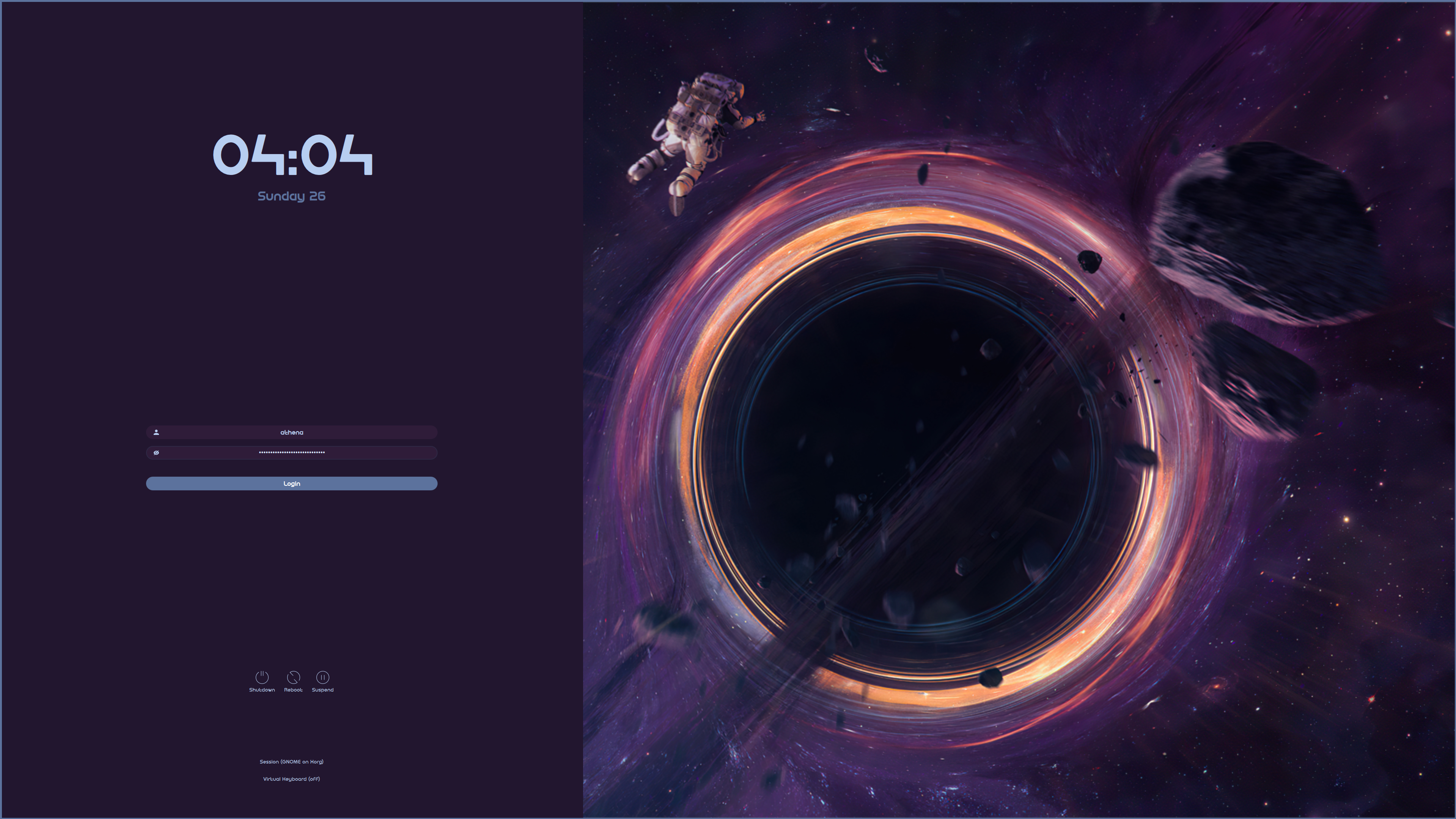
Black Hole
Section titled “Black Hole”Themes/black_hole.conf
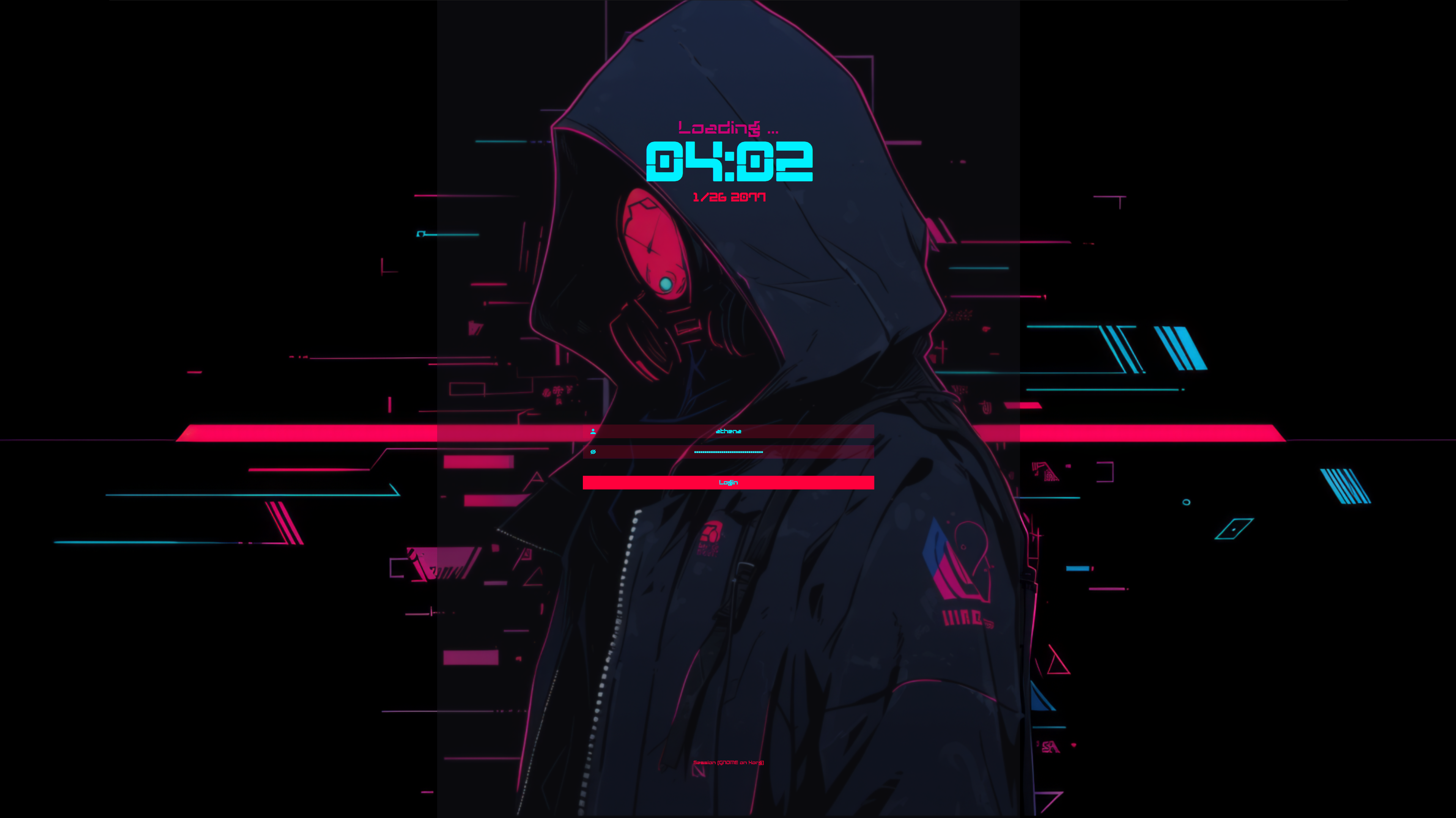
Cyberpunk
Section titled “Cyberpunk”Themes/cyberpunk.conf
Cyborg
Section titled “Cyborg”Themes/japanese_aesthetic.conf
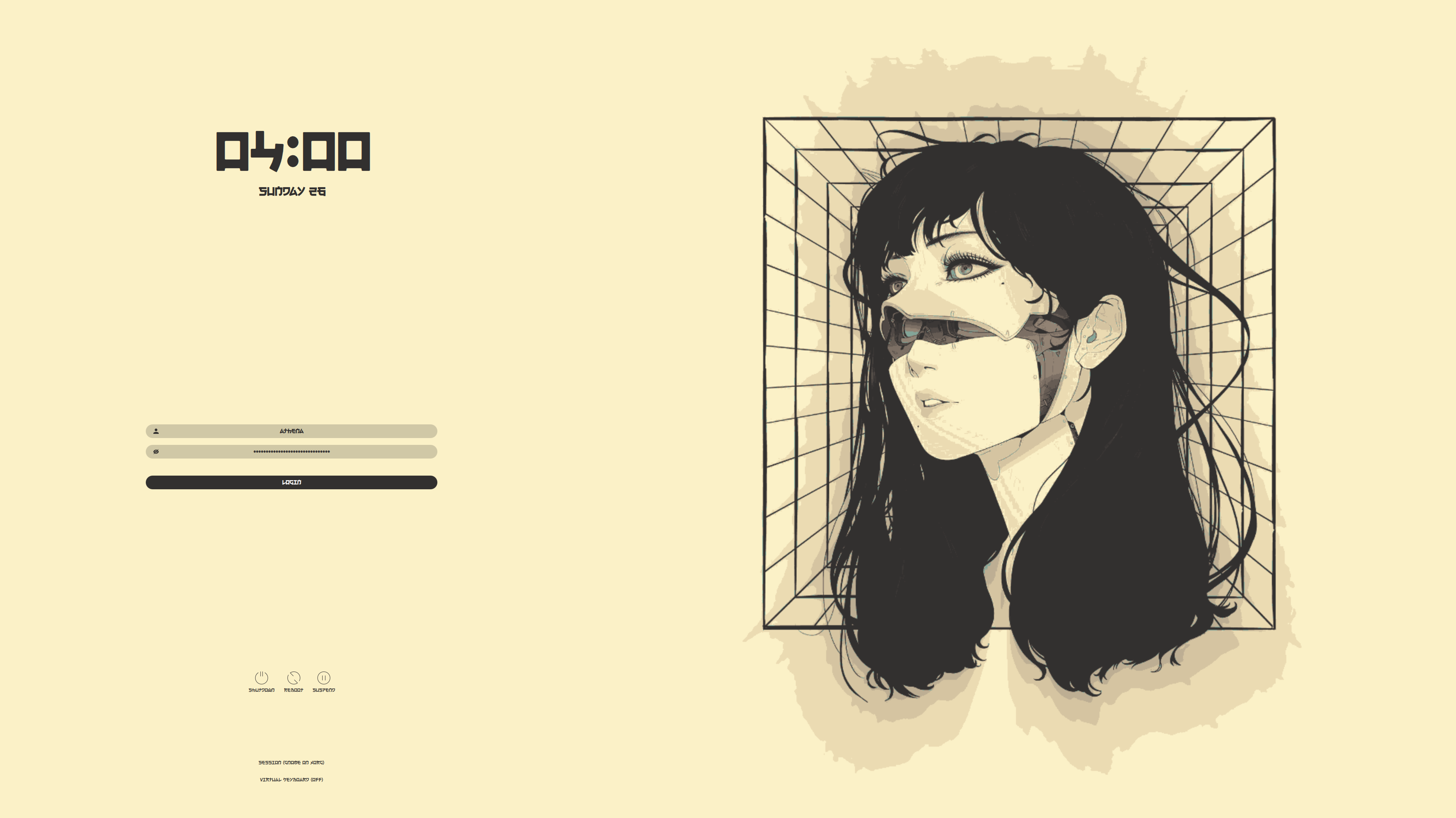
Themes/hyprland_kath.conf
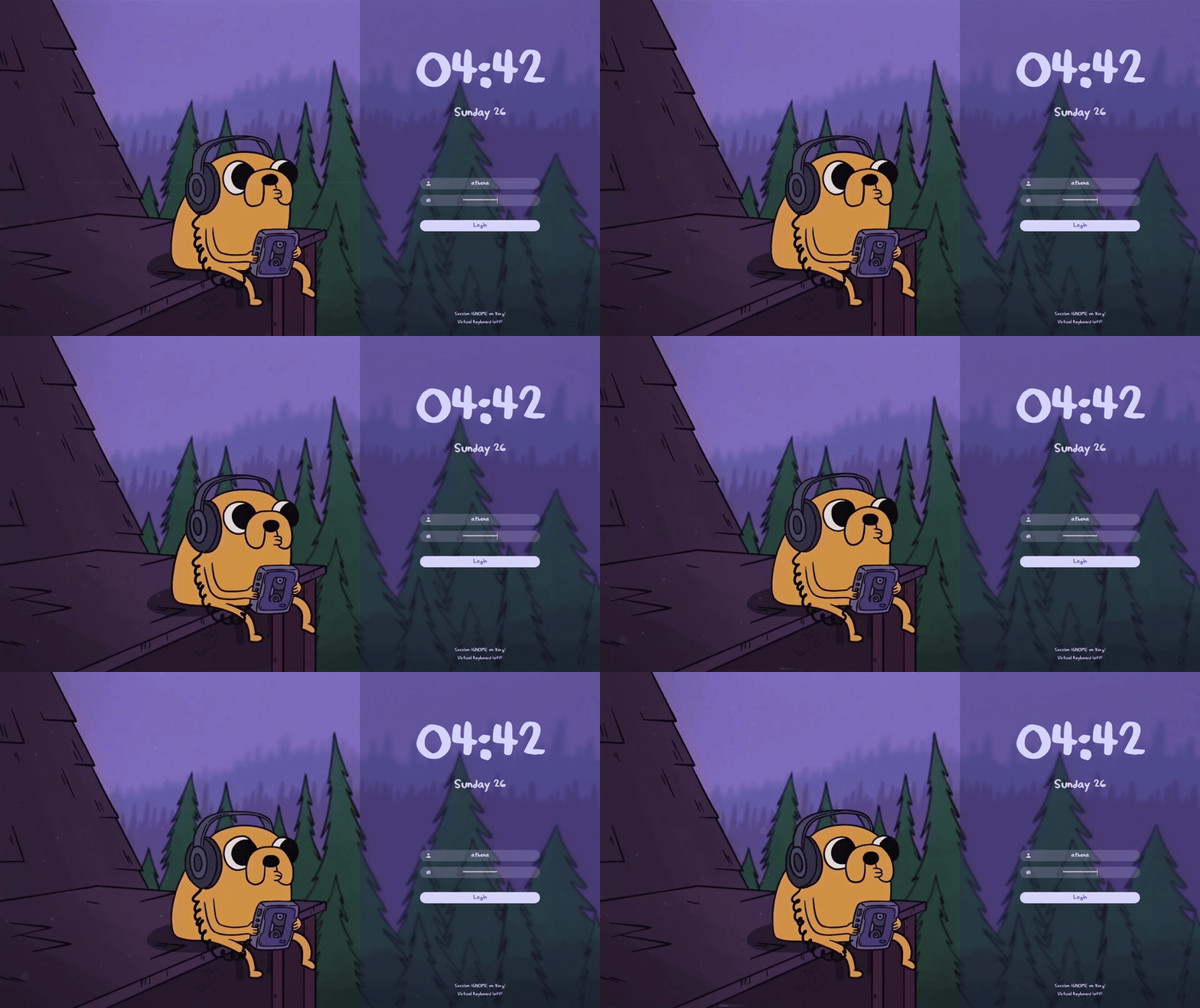
Jake The Dog
Section titled “Jake The Dog”Themes/jake_the_dog.conf
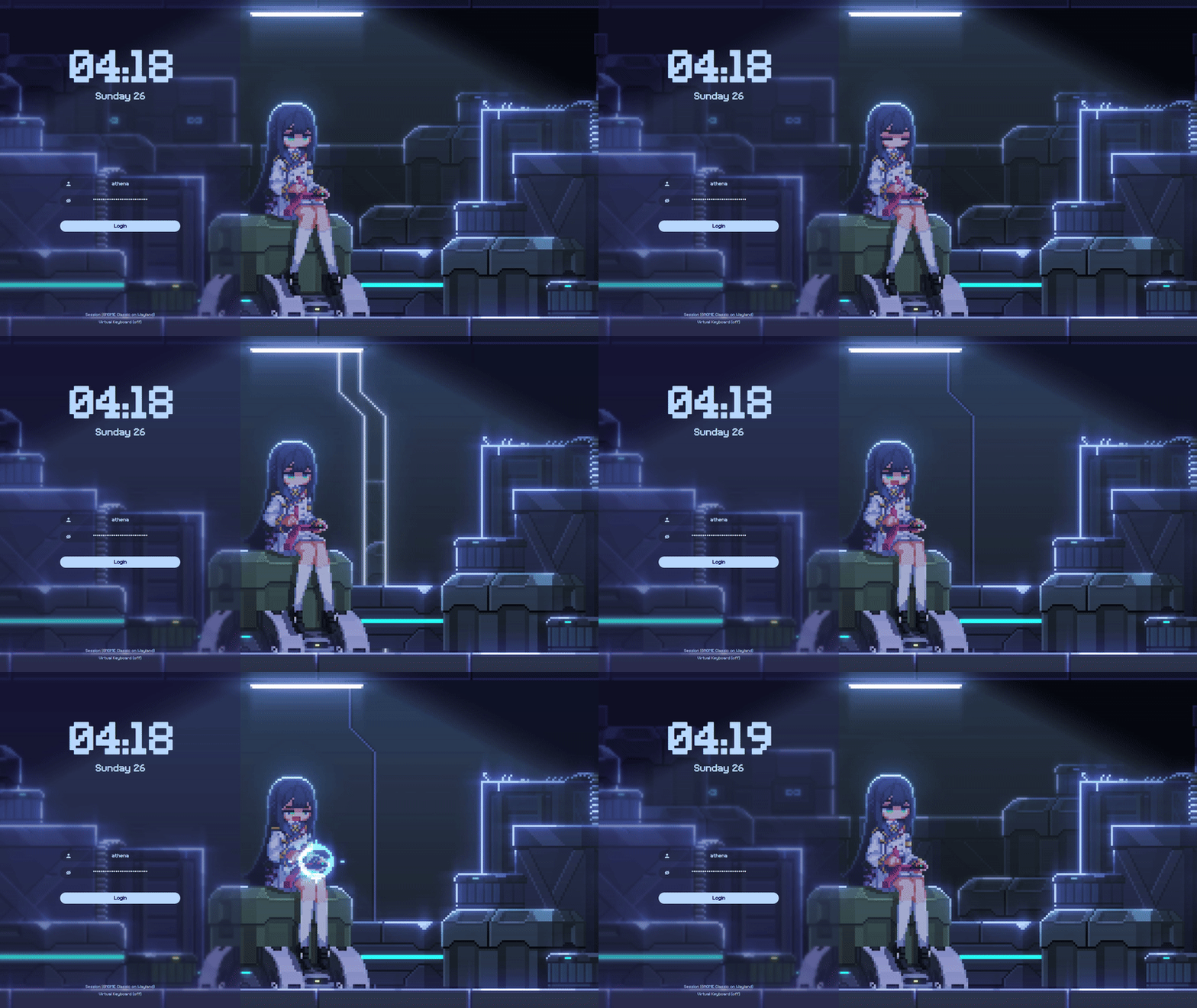
Pixel Sakura
Section titled “Pixel Sakura”Themes/pixel_sakura.conf

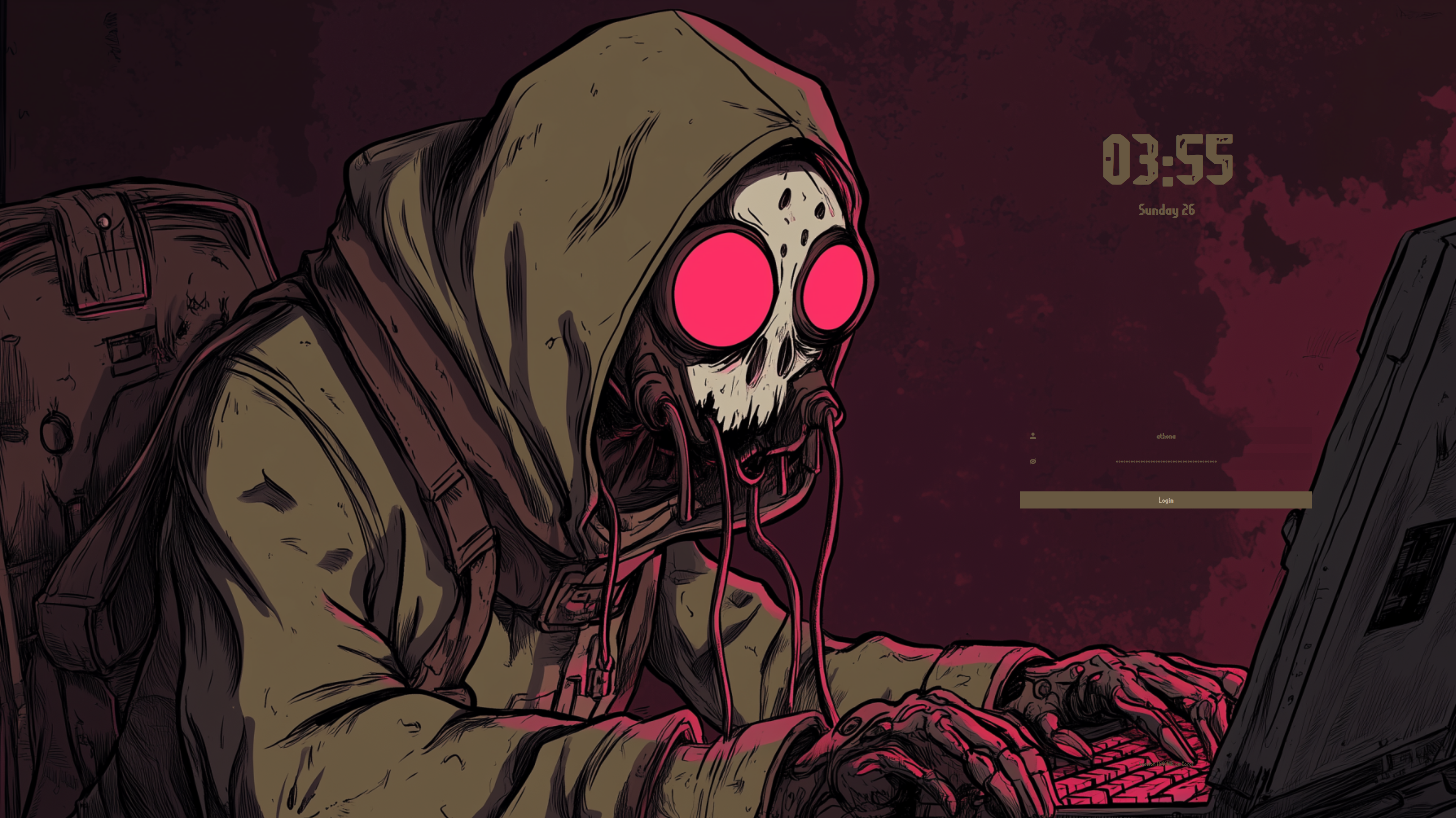
Post-Apocalypse
Section titled “Post-Apocalypse”Themes/post-apocalyptic_hacker.conf
Purple Leaves
Section titled “Purple Leaves”Themes/purple_leaves.conf
Multiple monitors
Section titled “Multiple monitors”On some systems, the display manager may appear on an unexpected monitor. In framebuffer-based setups, this can be influenced via kernel parameters.
To force the Linux framebuffer console (and framebuffer-based display managers) to appear on a specific framebuffer device, edit /etc/kernel/cmdline and add:
fbcon=map:Nwhere N is the framebuffer index. Finally, run:
sudo rebuild-ukisAvailable framebuffer devices can be listed with:
ls /dev/fb*This method affects the kernel framebuffer console, not display managers using modern KMS/DRM paths.
Framebuffer indices do not necessarily match physical monitor order. On modern systems (especially Wayland or multi-GPU setups), this option may have no effect.
If this does not work, monitor selection must be handled via GPU driver configuration or display manager–specific settings.